Boards Don't Have an AI Skills Gap. They Have a Vocabulary Gap.
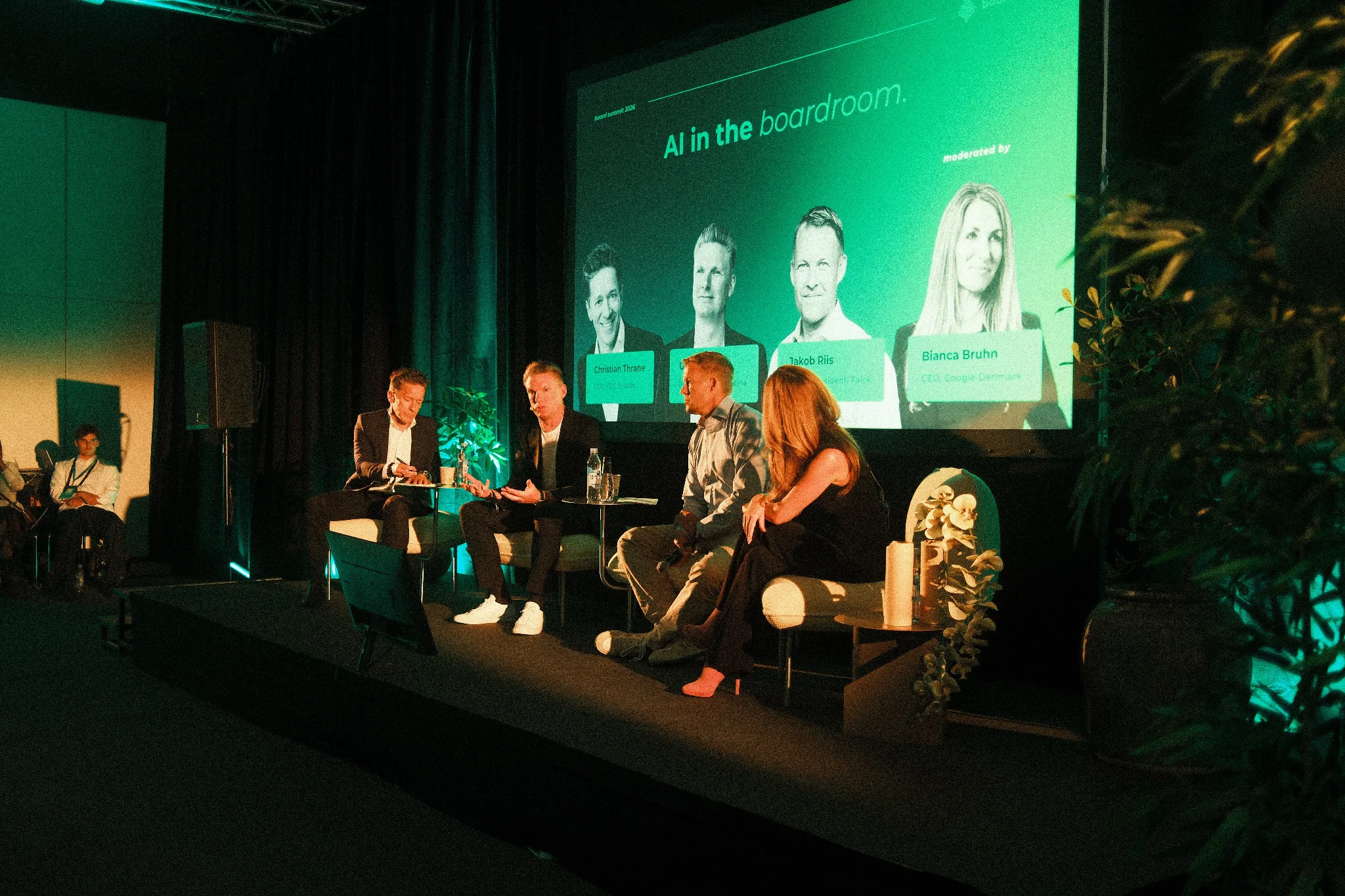
CEOs Ossi Lindroos, Christian Thrane and Jakob Riis, pressed by Google’s Bianca Bruhn at a Board Summit panel on AI in the boardroom, on why most boards’ real AI problem isn’t technical at all — and the ransomware attack one panelist’s own company caught in ten minutes, a job that normally takes eleven days.
Put five board members in a room and ask what “AI” means, and you'll likely get five different answers. That gap sat at the centre of a Board Summit panel on AI in the boardroom, moderated by Google's Bianca Bruhn with Ossi Lindroos, Christian Thrane and Jakob Riis.
At its core, the discussion was not about technical skill, but shared vocabulary — what AI actually means for the business, and when the board needs to get involved.
A vocabulary problem, not a technical one
Boardroom conversations about AI often stall because the same words mean different things to different people. One solution the panel discussed was hands-on experience: having board members use AI tools together, so they understand what the technology can and cannot do before debating its strategic implications.
The bottleneck is the organisation
Technology is rarely the hardest part. Much of the discussion centred on AI's organisational impact — from employees worried about job losses to the challenge of turning AI investment into real business value.
The discussion highlighted how companies can fail to see a return on AI not because the tools don't work, but because the organisation isn't ready to put them to use. At the same time, concrete applications — such as detecting cyberattacks or spotting patterns in complex data — already show what AI can deliver.
When the board needs to step in
Not every AI use case belongs on the board's agenda. Personal productivity tools can largely stay with management, while applications in high-governance areas demand closer board attention.
Healthcare and clinical decision-making came up as an example where boards need to stay close to developments. Regular, informal updates can help board members build familiarity with the technology before a major decision reaches the boardroom.
Comfortable, not expert
The panel's message was clear: boards don't need to become AI experts, but they do need to get comfortable with the technology. That means using AI themselves, agreeing with management on what success looks like, and continuing to ask the same fundamental questions boards have always asked — just now in the context of AI.