Europe has the capital. It doesn't have the plan.
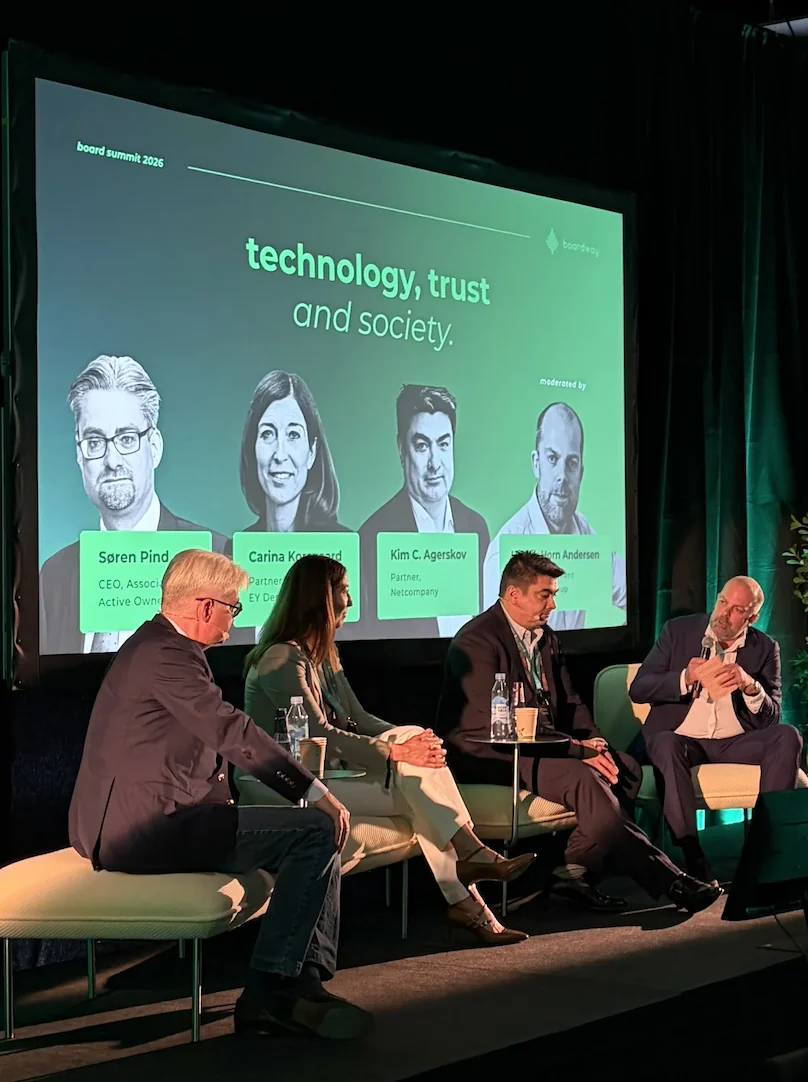
Søren Pind, Carina Marie G. Korsgaard and Kim Clausen Agerskov, a Board Summit panel on technology, trust and society, on why trust in big tech must be earned, not assumed, and why resilience now means a protocol and nerve, not foresight.
At a Board Summit panel on technology, trust and society, moderator Henrik Horn Andersen led Søren Pind, Carina Marie G. Korsgaard and Kim Clausen Agerskov through a discussion on geopolitics, technology and Europe's ability to compete. The conversation kept returning to one challenge: Europe has the capital and the values to compete, but still lacks the framework and speed to turn them into action.
Governance as the missing infrastructure
Rather than compete with the US and China on chips or cloud infrastructure — ground Europe has already lost — the panel argued that its real opening is trust. Developing and deploying AI responsibly could turn governance into a competitive advantage rather than just another compliance requirement. That governance is itself part of the framework Europe still needs to build, not a separate problem from it.
Defence is redrawing the map
Defence spending is rising across Europe, creating new demand for technology and tightening the link between security, innovation and investment. For boards, this means geopolitics can no longer be treated as something happening outside the business — it is increasingly shaping markets, investment decisions and strategic priorities directly.
Capital without a home
The panel's sharper warning concerned capital itself. Europe is not short of it: investors hold significant amounts, but the continent lacks the structures and incentives that make it easy to deploy into high-growth technology companies. The real risk isn't that European startups take American ownership — it's that intellectual property, talent and headquarters eventually follow the capital out of Europe.
Writing the plan
For boards, the response isn't predicting every crisis. It's building the structure and composure to act quickly when one hits — and staying curious enough to bring in outside expertise, challenge assumptions, and catch blind spots before they become losses. Closing the governance and investment gap, the panel agreed, is the plan Europe still needs to write.